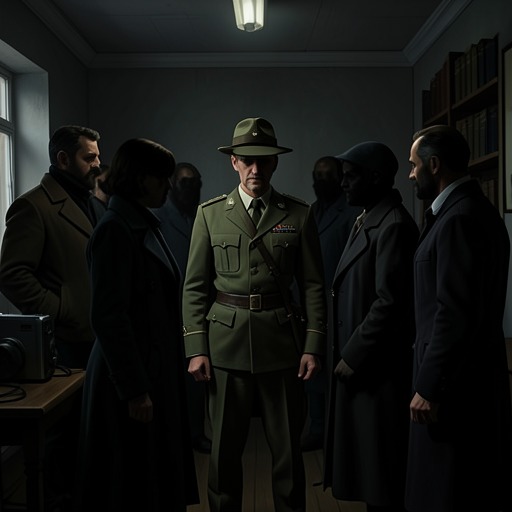
Benevolent Fraternity of Former Soldiers of the Army of the Republic of Vietnam
The SympathizerThe Benevolent Fraternity of Former Soldiers of the Army of the Republic of Vietnam is both a charitable organization for displaced veterans and a fundraising front for the General’s Movement. Its two functions reveal the tension at the heart of exile politics: the veterans need practical support as people without an army, country, or secure identity, while the organization also seeks resources for a political project that official institutions are unwilling to endorse.
Formation and Dual Purpose
The General and the unnamed narrator establish the Fraternity as a nonprofit charitable organization able to receive tax-deductible donations. The narrator helps move the plan forward, presenting it as a way to increase the happiness of former soldiers now living in exile. In one sense, that description is literal: the Fraternity serves the needs of thousands of veterans whose military and national identities have been stripped away. In another, the organization gives the General a means to collect funds for the Movement from supporters beyond the refugee community.
The arrangement does not erase the charitable purpose, but makes it inseparable from political organization. The veterans are not simply beneficiaries: the Fraternity also gathers people around a cause and gives that cause a legitimate public form. Its nonprofit status is therefore practical and political at once, enabling fundraising where a direct appeal for a counteroffensive movement might find little welcome.
Funding and Political Brokerage
The General and the narrator take the proposal to the Congressman at his district office in a Huntington Beach strip mall. The location is deliberately ordinary: the office sits among shops and parking lots, far from the formal centers of power. Inside, an American flag and photographs of Republican Party figures frame the meeting. The Congressman listens as the General explains the Fraternity’s functions, then rejects the prospect of congressional support. No one, he says, wants even to speak the name of the former country at that moment.
The refusal distinguishes official backing from private money. The General accepts that the American public may not support the cause openly, but the narrator argues for unofficial support. The organization’s expected donors are therefore not primarily Vietnamese refugees, who are themselves broke and broken, but affluent individuals and charitable foundations interested in supporting America’s former allies. The Fraternity’s fundraising model redirects the General’s appeal toward private benefactors when government endorsement is unavailable.
Representation and Exile
The Fraternity also responds to a problem of representation. At the meeting, the General invokes the idea that people unable to represent themselves must be represented, applying it to the refugees and to the way Hollywood depicts them. The organization cannot control that cultural representation, but it can support a political effort to shape how the exiles and their cause appear to others. Its charitable identity thus offers access to donors while its broader purpose contests the refugees’ powerlessness in public life.
That strategy sits uneasily beside the refugees’ place in the American Dream. Their poverty and unhappiness can make other Americans feel comparatively fortunate, even as the Fraternity seeks to improve their circumstances. The organization is built to help a community that has little money of its own, while depending on benefactors whose generosity is tied to political ideas about America’s old friends. Its dual function makes the material needs of exile and the ambitions of a future return movement part of the same institutional undertaking.